The spring semester is in full swing. On April 22, the Department of Physiology and Pathophysiology with the course of Medical Biology held the final meeting of the Physiology Scientific Club for this academic year, dedicated to the актуальна тема — “The Smart Gut: From Appetite to Mood.”
The meeting was held online in a friendly atmosphere. During the session, club participants had the opportunity to familiarize themselves with modern scientific approaches to studying the digestive system and to discuss recent data on the role of microbiota and its regulation of our immunity, body weight, mood, serotonin synthesis, and vitamin production.
During the meeting, the following presentations were delivered:
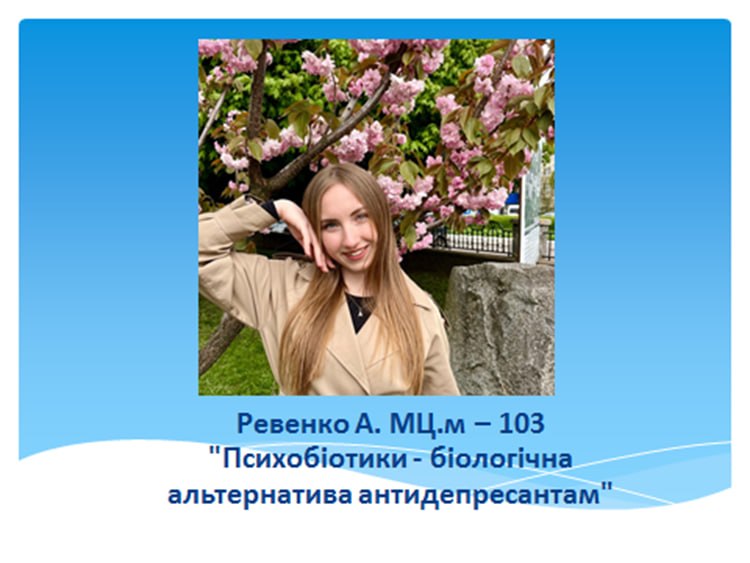
- Hanna Revenko, MC.m – 103, “Psychobiotics — A Biological Alternative to Antidepressants.”
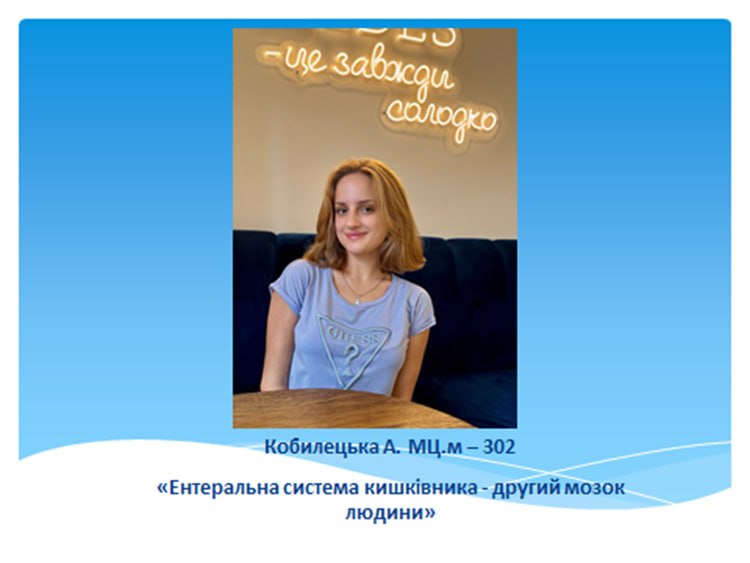
The presentation highlighted the role of the microbiome in the treatment of depression. Probiotic bacteria that are beneficial for mental health when consumed in sufficient amounts are called psychobiotics. Psychobiotics can be an excellent addition to standard pharmacotherapy (for example, SSRIs), as they can reduce gastrointestinal side effects of antidepressants and improve the overall treatment response. The effectiveness of probiotics may be comparable to some commonly used antidepressants (such as venlafaxine, duloxetine, etc.). - Anna Kobyletska, MC.m – 302, “The Enteric Nervous System — The Second Brain of Humans.”
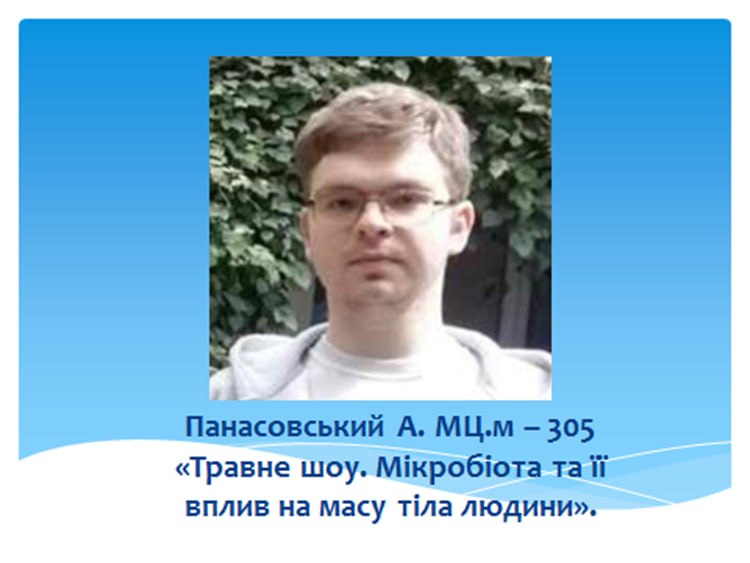
The presentation described modern approaches to studying the microbiome and its connection with the human brain. The question “Why is the gut considered a brain?” was discussed. The largest population of bacteria in the human body is found in the gastrointestinal tract. A new participant has been added to the Gut-Brain Axis, expanding it into the Microbiota–Gut–Brain Axis (MGBA). Issues concerning the relationship between brain and gut diseases were also discussed, including interesting studies in the fields of microbiota transplantation, giardiasis, and manifestations of depression. - Andrii Panasovskyi, MC.m – 305, “Digestive Show: Microbiota and Its Impact on Human Body Weight.”
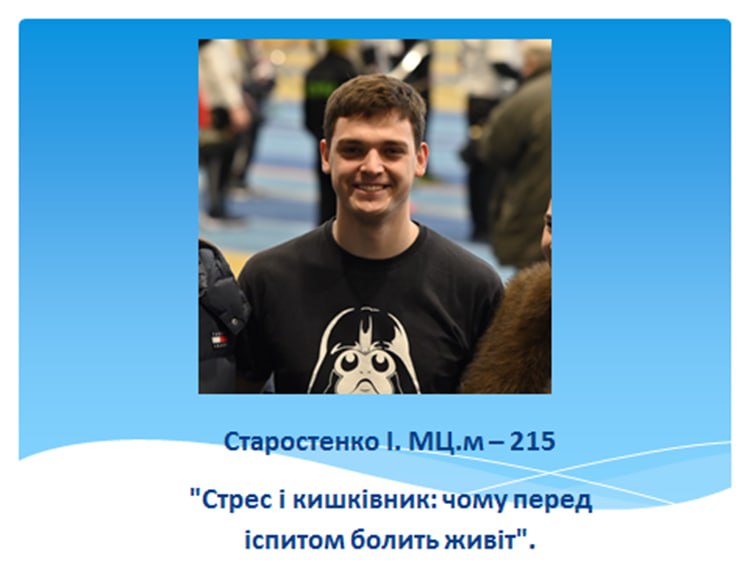
The presentation highlighted the mechanisms by which intestinal microbiota influence metabolism, regulate energy balance, and their possible connection with metabolic disorders. The following topics were addressed: functions of the microbiome, the relationship between microbiome and body weight, the effect of lactobacilli on body weight depending on specific strains (for example, L. gasseriand L. rhamnosus), Firmicutes and Bacteroidetes, bifidobacteria (Bifidobacterium), lipopolysaccharides (LPS), appetite and food craving regulation, ghrelin and leptin, as well as recommendations for proper nutrition. - Ihor Starostenko, MC.m – 215, “Stress and the Gut: Why Your Stomach Hurts Before Exams.”
The presentation included information from international studies (Gastroenterology), which show that emotional stress directly and immediately affects the motor and secretory functions of the gastrointestinal tract. That is why emotions can be physically felt in the abdomen. About 90% of serotonin — a neurotransmitter often referred to as the “happiness hormone” and responsible for mood stability — is produced in the gut rather than in the brain. The mechanism of the “fight or flight” response was also discussed. According to articles published in the international journal Brain, Behavior, and Immunity, even short-term psychological stress (such as examination periods) can significantly alter the composition of intestinal microflora. Recommendations were also provided on how to support gut health and effective methods for reducing gastrointestinal discomfort.
The meeting was held in an atmosphere of active discussion, where participants had the opportunity to ask questions, share their ideas, and discuss prospects for further research into the human microbiome.
The organization of this event aligns with the principles of sustainable development and is consistent with modern approaches to public health development and the formation of responsible attitudes toward health preservation, disease prevention, and improving quality of life through the dissemination of scientifically grounded knowledge in the medical community. Such meetings contribute to the development of students’ scientific thinking and deepen their interest in modern medical and biological issues.