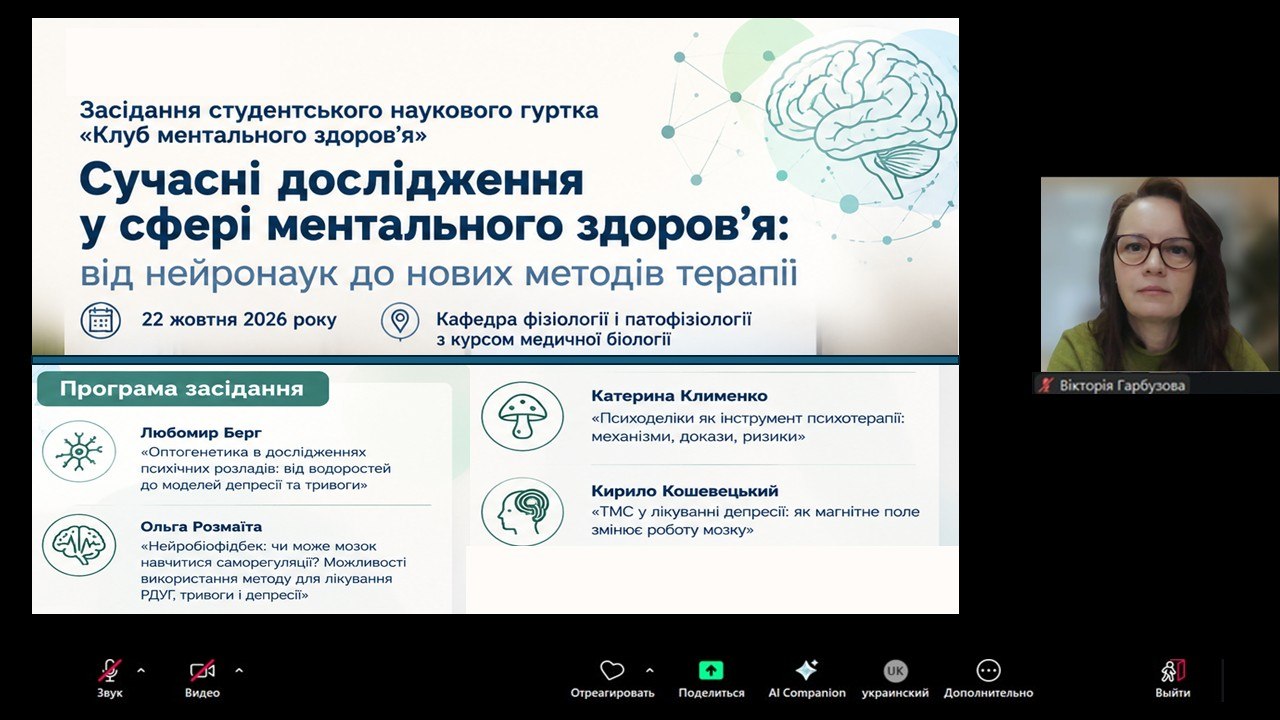
On 22 October 2026, the Department of Physiology and Pathophysiology with a Course in Medical Biology held a meeting of the student research group “Mental Health Club” on the topic “Current Research in Mental Health.”
During the meeting, students explored contemporary scientific approaches to understanding brain function and promising methods for supporting people with mental health disorders. The presentations covered emerging areas of neuroscience, psychophysiology and neuromodulation.
The programme featured four insightful presentations:
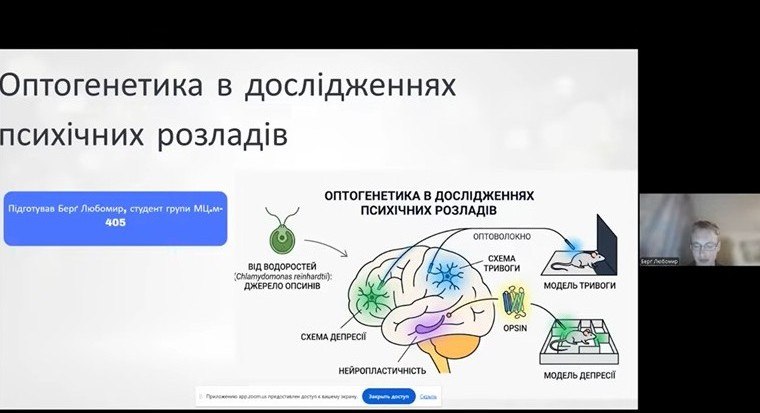
Liubomyr Berh presented “Optogenetics in Mental Health Research: From Algae to Models of Depression and Anxiety,” exploring the potential of optogenetic techniques for investigating the neuronal mechanisms underlying mental health disorders.
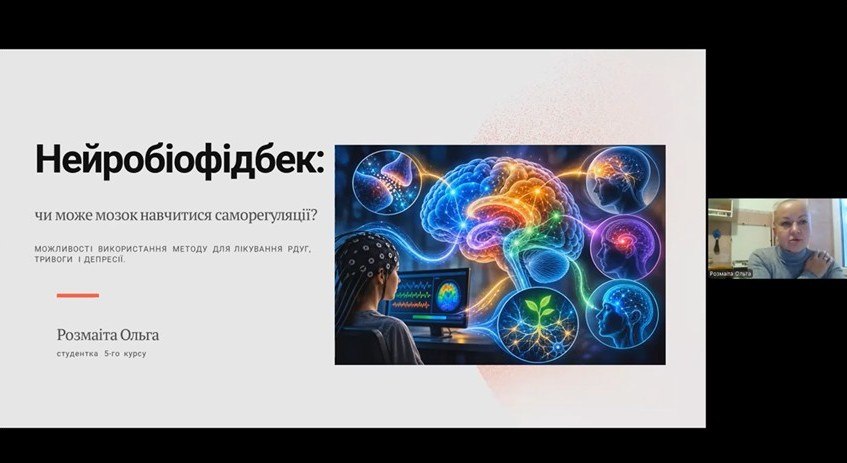
Olha Rozmaita delivered a presentation entitled “Neurofeedback: Can the Brain Learn Self-Regulation? Applications in the Treatment of ADHD, Anxiety and Depression,” examining the potential of neurofeedback as an approach to training self-regulation of brain activity.
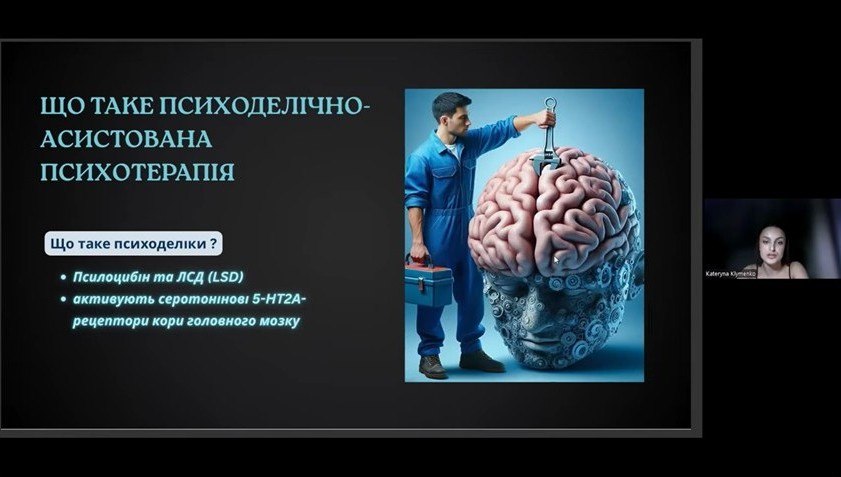
Kateryna Klymenko presented “Psychedelics as a Tool in Psychotherapy: Mechanisms, Evidence and Risks,” focusing on scientific evidence concerning the therapeutic use of psychedelics, their mechanisms of action and important safety considerations.
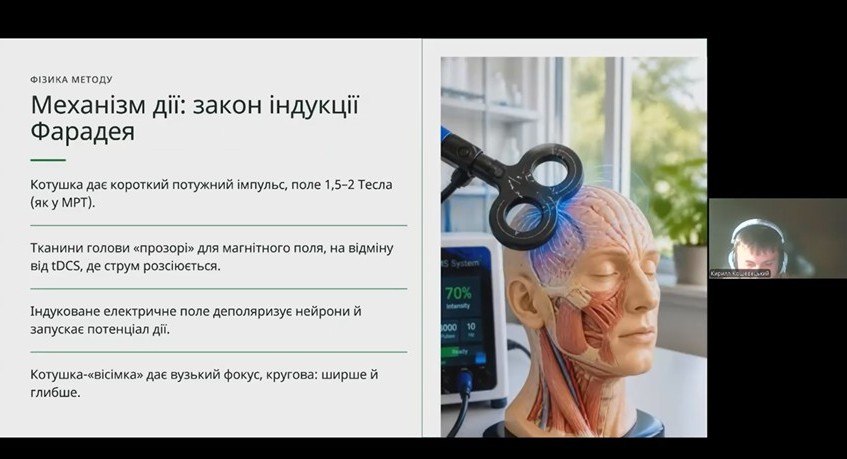
Kyrylo Koshevetskyi delivered a presentation entitled “Transcranial Magnetic Stimulation (TMS) in the Treatment of Depression: How Magnetic Fields Change Brain Function,” introducing the principles of transcranial magnetic stimulation and its potential applications in treating depressive disorders.
The meeting provided an opportunity to discuss current areas of scientific research that deepen our understanding of the neurobiological mechanisms underlying mental health disorders and broaden perspectives on their prevention and treatment.
The activities of the Mental Health Club contribute to the implementation of United Nations Sustainable Development Goal 3 – “Good Health and Well-Being,” which includes promoting mental health and improving quality of life.
The Mental Health Club continues to provide a platform for scientific inquiry, knowledge exchange and the development of students’ research skills, encouraging an evidence-based approach to mental health.
The participants’ presentations are now available on the Department’s YouTube channel:
Olha Rozmaita: https://www.youtube.com/watch?v=oFXK3MUK_DI
Kyrylo Koshevetskyi: https://www.youtube.com/watch?v=VhGeAfLt-TI
Kateryna Klymenko: https://www.youtube.com/watch?v=dRfyUiHp6r4
Liubomyr Berh: https://www.youtube.com/watch?v=FQQnozNX-CY