The spring semester has begun. On February 9, the Department of Physiology and Pathophysiology with a course in Medical Biology held another meeting of the “Physiology Scientific Club,” dedicated to the relevant topic: “Human Immunity and Its Types. Protective Properties of Lymph and Its Components.”
The meeting was held online in a friendly atmosphere. During the session, club members had the opportunity to familiarize themselves with modern scientific approaches to studying the immune system, discuss the latest data on the role of the lymphatic system and its regulation by immunity, genetic mechanisms of autoimmune disease development, and the role of the immune system in their pathogenesis.
The following presentations were delivered during the meeting:
“Mechanisms of Autoimmune Disease Development”
The presentation highlighted modern immunological mechanisms of autoimmune disease development, their pathogenesis, as well as the concepts of central and peripheral tolerance of the human body.
(Iryna Kusovnyk, MC.m–305)
“Laboratory Diagnosis of Autoimmune Thyroid Diseases”
This report covered modern immunological mechanisms of thyroid diseases and their timely diagnosis.
(Mariia Tovstukha, MC.m–303)
“Natural and Artificial Immune System Stimulators”
The presentation discussed the impact of lifestyle and nutrition on immunity, information about immune stimulators, as well as facts and myths about dietary supplements and nutraceuticals.
(Anna Kobyletska, MC.m–302)
“Food as Medicine: How Nutrition Affects Our Immunity”
The report focused on the influence of nutrition on the immune system, the immune status of food components, vitamins, and trace elements. Recommendations for an immune-boosting diet were provided.
(Sofiia Pinchuk, MC.m–306)
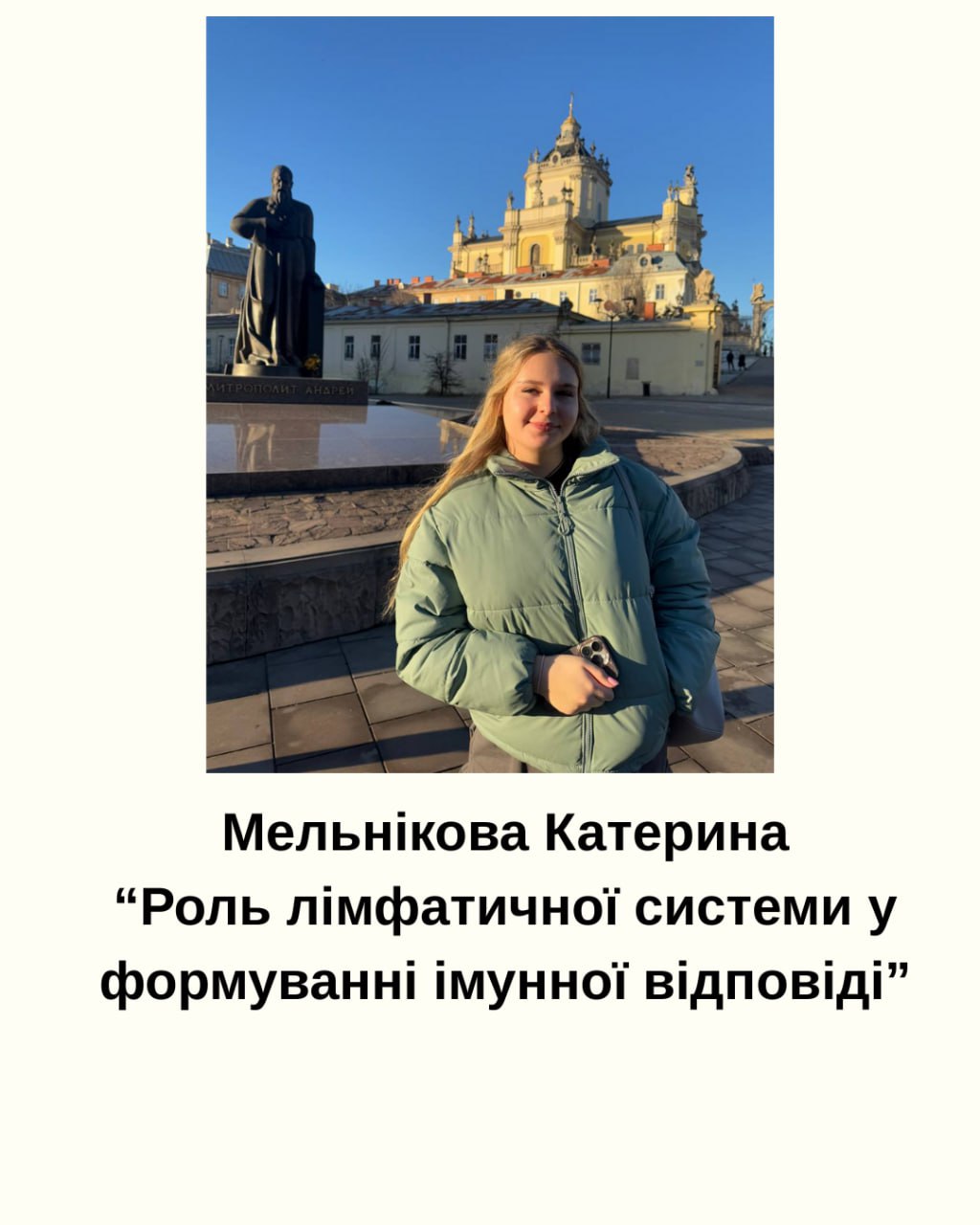
“The Role of the Lymphatic System in Immune Response Formation”
This presentation highlighted key components of the lymphatic system, specialized lymphoid organs as central “players” in immune response, and the algorithm of their functioning.
(Kateryna Melnikova, MC.m–303)
“Movement Is Life: Why Lymph ‘Loves’ Active People”
Modern medicine increasingly emphasizes not only disease treatment but also the maintenance of physiological mechanisms that ensure human health. This report aimed to explain, from scientific and physiological perspectives, why physical activity is a key factor in normal lymphatic system functioning and to demonstrate its impact on immunity, metabolism, and overall health.
(Ihor Starostenko, MC.m–215)
The meeting took place in an atmosphere of active discussion. Participants had the opportunity to ask questions, share their own ideas, and discuss prospects for further research in the field of immunology. Such meetings contribute to the development of students’ scientific thinking and deepen their interest in modern medical and biological issues.